
What is Lumen?
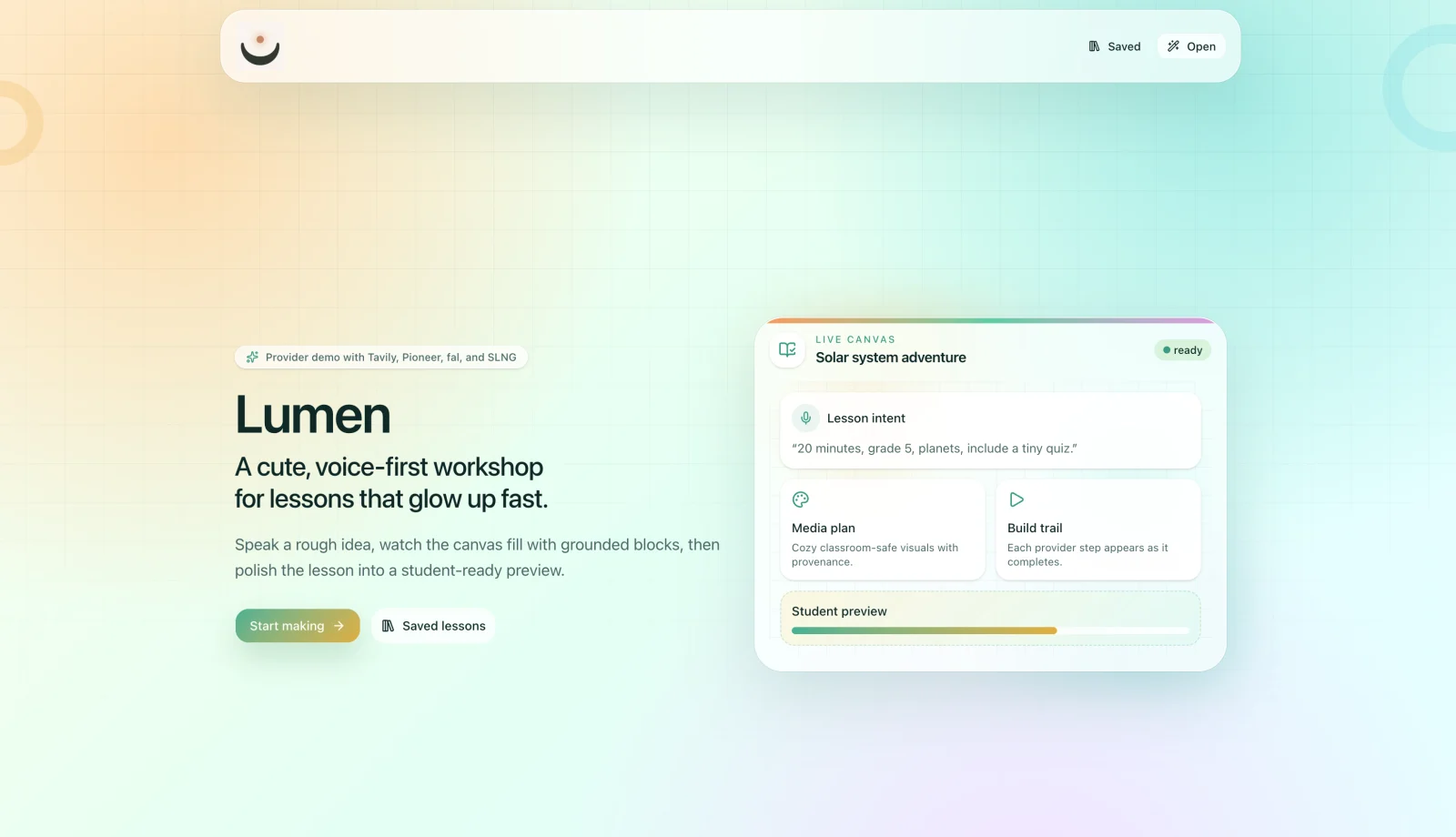
Lumen is a voice-first AI lesson authoring app for teachers. A teacher speaks or types a lesson intent, and Lumen turns it into a structured lesson canvas: objectives, hook, explanation, activity, quiz, citations, media, narration, and rehearsal support.
The product is built around a simple idea: lesson prep should not start with a blank document or a generic wall of AI text. It should start with the way teachers naturally think out loud, then become a canvas they can inspect, edit, and teach from.
Why we built it
Many AI education tools stop at text generation. They can draft an explanation, but teachers still need to break that text into objectives, activities, questions, examples, citations, and classroom-ready material.
Lumen takes a more practical path: it treats a lesson as a schema-backed document. Every generated section belongs to an editable lesson structure, and each provider in the pipeline has a clear job.
Voice-first input
Teachers can speak naturally, capture rough intent quickly, and refine the lesson afterward.
Editable lesson canvas
Lumen creates structured blocks for objectives, activities, quizzes, media, and teacher notes.
Grounded material
Research and citations help move the lesson beyond generic AI output.
Rehearsal support
Voice agent sessions help teachers rehearse delivery and pressure-test the lesson flow.
How it works
The main flow starts in Studio:
- A teacher speaks or types a lesson intent, such as “20 minutes, grade 5, planets, include a tiny quiz.”
- Lumen transcribes or accepts the text input.
- The system researches the topic, extracts important concepts, plans the lesson, and streams patches into the canvas.
- The teacher reviews the generated objectives, explanation, activity, quiz, citations, and media plan.
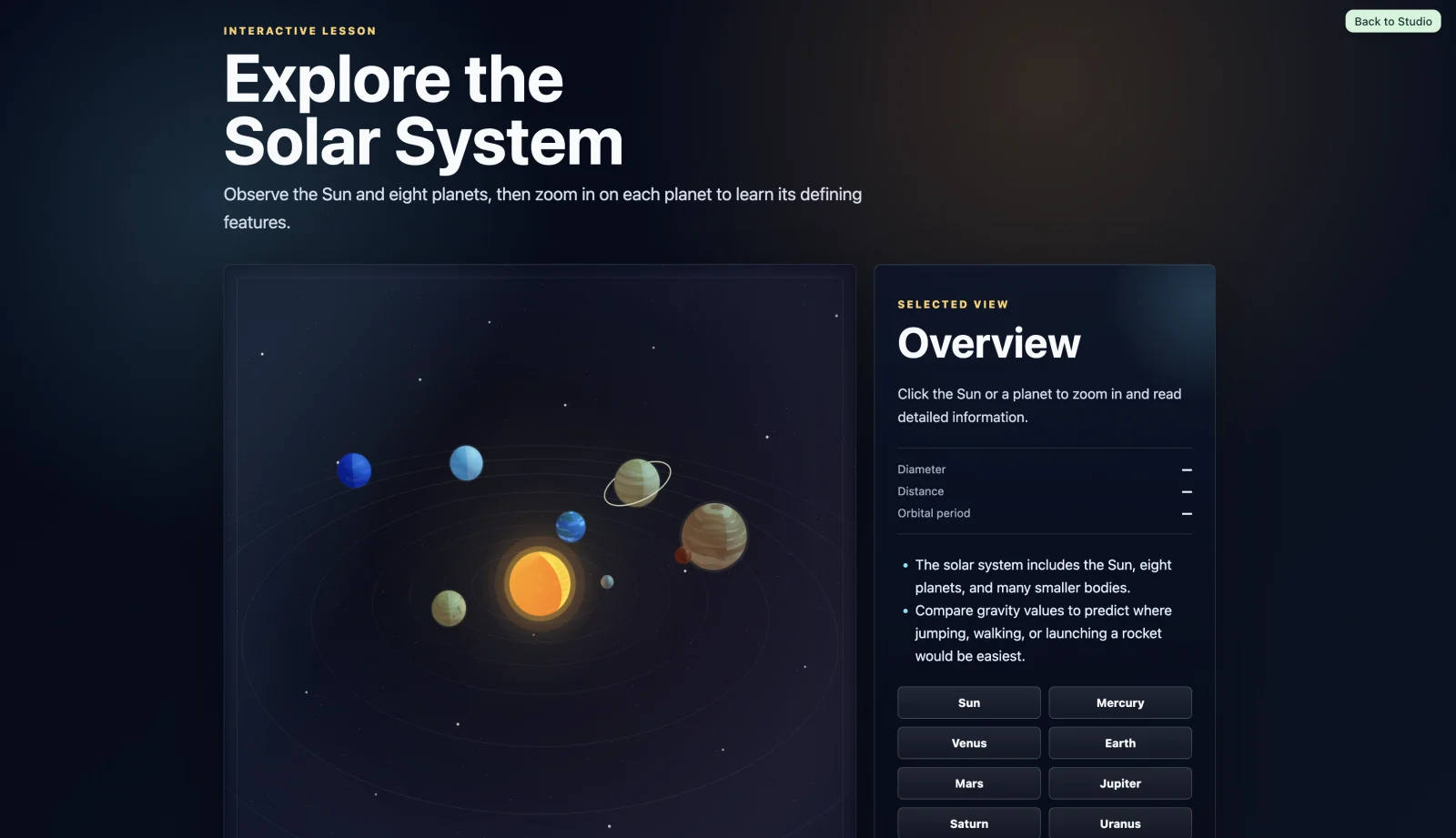
- Lumen can generate narration and create a saved HTML lesson that can be reopened later.
- The teacher can launch a voice rehearsal session with lesson context.
Architecture
Lumen is not a one-shot prompt wrapper. It is an orchestrated lesson-building workflow where each provider contributes a specific capability:
- SLNG handles speech-to-text, text-to-speech, and voice agent sessions.
- Tavily provides grounded search excerpts and citations.
- Pioneer AI by Fastino Labs extracts entities and concepts from the teacher transcript and research context.
- OpenAI plans the structured lesson and generates the saved lesson runtime.
- fal creates storyboarded image and video assets for lesson media blocks.
- PostgreSQL persists lessons, versions, and generation runs.
Teacher voice or typed intent
  ↓
SLNG transcription or typed fallback
  ↓
Tavily research and citations
  ↓
Pioneer concept extraction
  ↓
OpenAI structured lesson planning
  ↓
fal media generation
  ↓
SLNG narration and rehearsal
  ↓
Saved HTML lesson
Key features
- Live generation timeline: Teachers can see which provider is running and what each step contributes.
- NDJSON streaming: The app streams lesson patches to the browser as generation progresses.
- Editable lesson schema: Lessons are represented as structured documents instead of opaque paragraphs.
- Media provenance: Generated images, videos, and audio keep provider status and prompt context.
- Graceful fallbacks: The demo can still run when some provider keys are missing.
- Saved lessons: Finished lessons can be reopened from the dashboard.
Explore Lumen
Try the live app, inspect the open-source implementation, and follow the project as we keep improving voice-first lesson authoring.
Hackathon recognition
Lumen won 3rd place overall and received the SLNG// sponsor award at the {Tech: Europe} Paris AI Hackathon.
The win validated the product direction: teachers need AI systems that fit real preparation workflows, and voice can be a powerful interface when it captures intent, supports rehearsal, and keeps the teacher in control.
The Team
Lumen was built by Team Tihado:
 Phuong Nhi Chau
 Hanh Thi-Hong Tran
 Tien Ngoc Viet
 Tan Nhat Linh LE
Not a wall of text. A canvas you can teach with.